
With Pokémon Day and the 30th anniversary of the series rapidly approaching (Feb. 27, 2026), we thought we would try to teach fans something they might not know about their favorite pocket monsters. Many Pokémon are based on real-world animals, but others are based on mythological creatures. Considering The Pokémon Company and Game Freak are both Japanese, it is unsurprising that many of these creatures have East Asian origins and may not be familiar to Westerners. The following are some of the Pokémon you may not know are based on folklore.
Ninetales
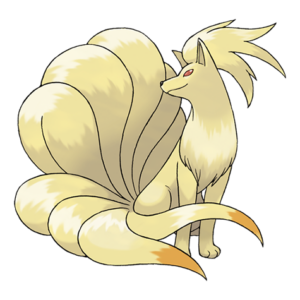
Ninetales; image credit: The Pokémon Company
Ninetales is based on the Japanese yokai (spirit) kitsune, a shapeshifting fox that plays tricks on people. It is said that kitsune grow more tails as they age and that when they turn 1,000 years old, they grow their ninth tail and turn white and gold. This explains the dramatic color change when Ninetales evolves from Vulpix.
Meowth
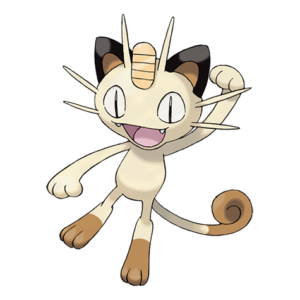
Meowth; image credit: The Pokémon Company
Meowth is based on the maneki-neko or, as it is more commonly known in the West, the lucky cat. There are many theories as to its origin. One claims a failing shopkeeper took care of a stray cat who then repaid the favor by leading people to the store, saving the business. This fits with why Meowth has a coin on its head and can use the move Pay Day, which nets its trainer some extra pocket money. Another theory claims a falconer narrowly avoided being hit by lightning after a cat beckoned him into Gotoku-ji Temple. These stories spread, inspiring an iconic figurine. Although they are Japanese in origin, the figurines became incredibly popular in China as well. Keep an eye out for one by the register next time you order Chinese takeout.
Farfetch’d
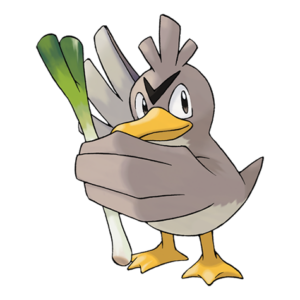
Farfetch’d; image credit: The Pokémon Company
Growing up, most kids on the playground had no idea why Farfetch’d always held a leek. It’s not as random as you might think. Farfetch’d is based on a Japanese saying, “a duck comes bearing green onions.” In order to make duck stew, a person must hunt a duck and harvest onions. If they were to encounter a duck carrying an onion, it would be extremely convenient, but it is also a wildly unlikely situation. One that is far-fetched.
Drowzee and Musharna
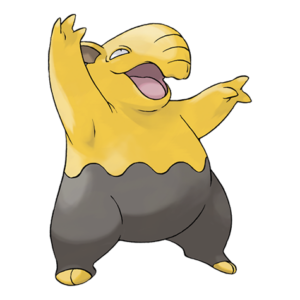
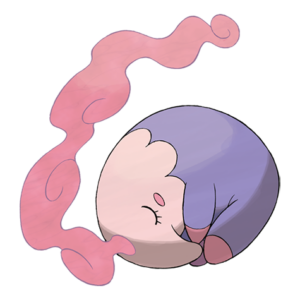
Drowzee and Musharna; image credit: The Pokémon Company
You probably know that these Pokémon are based on the tapir, but doesn’t it seem like a coincidence that there are two separate psychic-type tapirs? This is because Drowzee and Musharna are not based on the type of tapir running around Southeast Asia but rather the baku, a tapir-like yokai that protects people by eating their bad dreams while they sleep. This is why Dream Eater is a key technique in the skill set for both Pokémon.
Lickitung
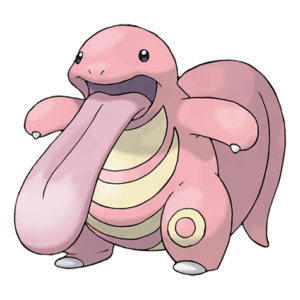
Lickitung; image credit: The Pokémon Company
As mentioned in a previous article, Lickitung is based on the akaname, a long-tongued yokai that appears in rundown bathhouses to lick the dirt and grime off the walls and washtubs. They are not particularly risky to humans, but their grotesque appearance is enough to inspire many to keep their living space clean. Lickitung, on the other hand, could clean my bathroom any time.
Magikarp and Gyarados
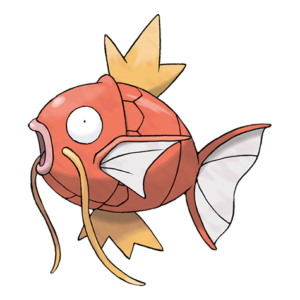
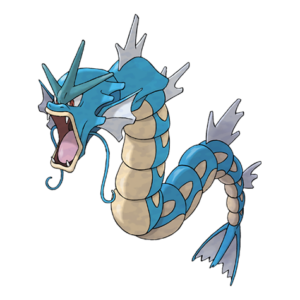
Magikarp and Gyarados; image credit: The Pokémon Company
Before The Little Engine That Could, there was a Chinese tale about a koi fish determined to climb a waterfall. For 100 years, it tried, and one day it finally succeeded. The gods rewarded its perseverance by transforming the koi into a dragon. Magikarp — the weakest Pokémon — evolving into the powerhouse Gyarados is based on this legend. It is also why, in Pokémon Snap, if you knock Magikarp into a waterfall, it evolves and re-emerges.
Dunsparce
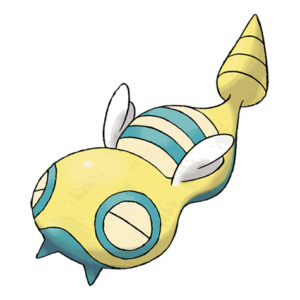
Dunsparce; image credit: The Pokémon Company
The Pacific Northwest has Bigfoot, Scotland has the Loch Ness Monster, and Japan has the tsuchinoko. More of a cryptid than a legend, tales of a fat, jumping snake can be traced back to the eighth century. While most do not believe in tsuchinoko, many are determined to prove its existence, and one town even holds an annual hunt with a prize for anyone who can capture one. Dunsparce is based on this creature, though perhaps the most famous appearance of a tsuchinoko in a video game is in Metal Gear Solid 3: Snake Eater.
Sneasel
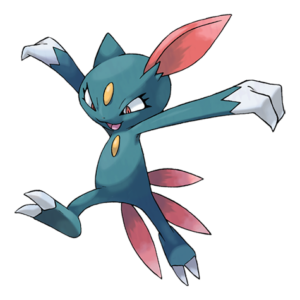
Sneasel; image credit: The Pokémon Company
Sneasel is yet another Pokémon based on a yokai. The kamaitachi is said to be a weasel-like creature that rides on the wind and cuts people with its razor-like claws. Those who have gotten caught in a strong, sudden gust of wind, especially one that leaves marks on the skin, are said to have been attacked by the kamaitachi. While kamaitachi is represented in Pokémon through Sneasel, it is also a prominent boss in Nioh 2.
Lotad and Capsakid
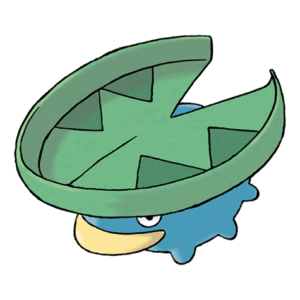
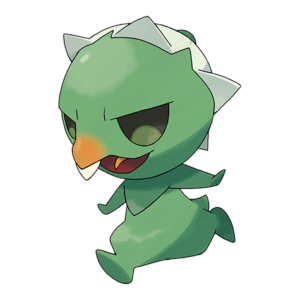
Lotad and Capsakid; image credit: The Pokémon Company
Both Lotad from Generation III and Capsakid from Generation IX are based on the kappa, a popular yokai. Kappa are depicted as turtle-like creatures with either a tonsured head (like Capsakid) or with a dish on top (like Lotad). There are wildly different descriptions of kappa behavior. Some say they are mischievous thieves who steal and hide objects. Others’ descriptions are much darker, describing kappa as monsters that butcher humans and extract their souls through their anuses. Kappa characters in video games vary greatly as well. Kapp’n from Animal Crossing is a family-friendly take, while the ones in Ghostwire Tokyo are absolutely terrifying.
Froslass
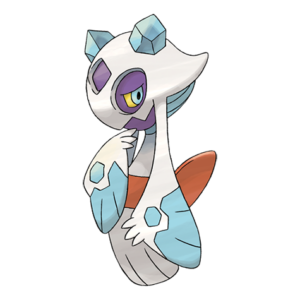
Froslass; image credit: The Pokémon Company
Froslass is based on the yuki-onna, a beautiful yet horrifying yokai that wanders through snowy mountains, attracting men before freezing them to death with a single touch. The Ice/Ghost typing of Froslass is the perfect combination for this homage, though the most famous appearance of the yuki-onna in a video game is likely in Nioh.
Pansage, Pansear, and Panpour
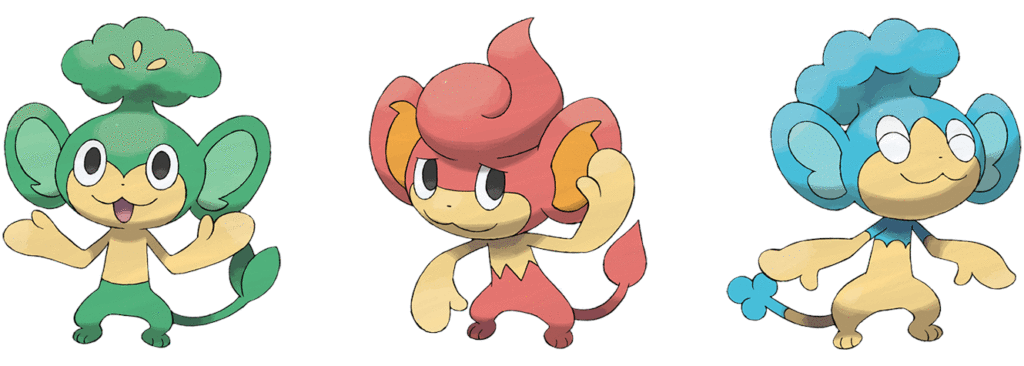
Pansage, Pansear, and Panpour; image credit: The Pokémon Company
Pansage, Pansear, and Panpour are based on the Three Wise Monkeys, which are regularly seen covering their eyes, ears, and mouth, respectively. They are associated with the phrase “see no evil, hear no evil, speak no evil,” a daily reminder to maintain integrity. The original art for the Pokémon showed Pansage with its mouth open, Pansear with its hand up to its ear, and Panpour with its eyes closed, making the association fairly easy. However, the 3D models and their regular appearances on Pokémon Concierge do not show these behaviors.
Tornadus and Thundurus

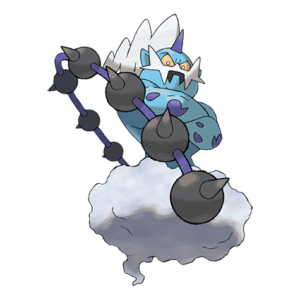
Tornadus and Thundurus; image credit: The Pokémon Company
Tornadus and Thundurus are based on Fūjin and Raijin, the Shinto gods of wind and thunder. These gods were described as living on clouds — just like the Pokémon. In folklore, Raijin is usually colored red, which differs from the primarily blue design of Thundurus, though both Fūjin and Tornadus are green. While the power of these gods is oftentimes destructive, Fūjin and Raijin are revered because storms have protected Japan from foreign invasion.
Are any of these Pokémon key members of your team? Are there other folklore-based Pokémon you have an affinity toward? Let us know in the comments!
See more:
- Pokémon Fan Sites Untouched Since the ‘90s
- The Hardest-to-Pronounce Pokémon Names (Updated)
- 10 Video Game Villains Who Got Redemption
Featured image photo credit: The Pokémon Company
Leave a Reply